Building Beyond Ireland: Lessons from Niall Horgan and Alan Holland
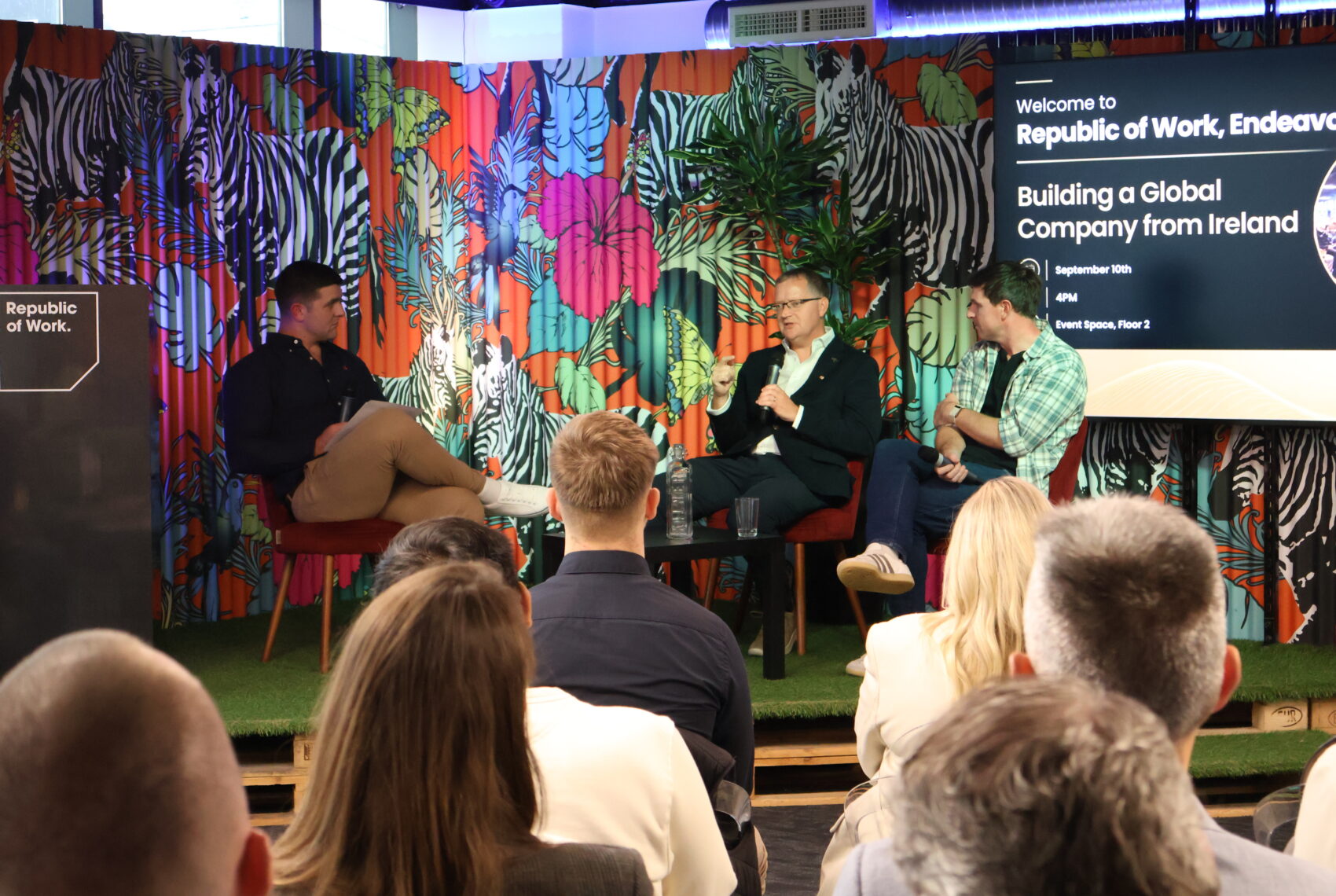
Endeavor Entrepreneurs Alan Holland, Founder and CEO of Keelvar, and Niall Horgan, Co-founder and Chair of Gym+Coffee, joined us to share their experiences of taking two very different Irish companies into international markets.
Their businesses could hardly be more different, but both spoke candidly about thinking globally from the start, taking opportunities before they felt completely ready, and figuring things out along the way.
The early days of building Keelvar and Gym+Coffee
Alan’s first major commercial opportunity came after Siemens discovered work his team had done with Cork City Council. Niall’s early days at Gym+Coffee involved clothing rails in parks, pop-up shops and workout meet-ups as the founders worked to build a brand and the community around it.
Both Alan and Niall have been part of the Endeavor network for several years, but their routes to building internationally were very different.
Long before Keelvar existed, Alan was already looking beyond Ireland. As the first PhD student in UCC’s AI research lab, he worked in an international research community and organised weekly seminars with researchers from Stanford, Michigan, Harvard and elsewhere.
“When we were publishing our AI papers, we never thought of publishing at an Irish conference,” he said. “It’s like, we’re going big leagues.”
That mindset carried into Keelvar.
An early project helping Cork City Council caught the attention of Siemens, which was tackling a similar procurement challenge at a much larger scale.
“We got lucky,” Alan said. “We got a knock on the door from Siemens.”
Success with Siemens opened conversations with other multinationals. A small team in Cork suddenly had to convince some of the world’s largest companies that it could operate at their level.
Gym+Coffee took a different route.
Niall and Diarmuid, his co-founder, studied brands like Nike, Adidas and Gymshark and wanted Gym+Coffee to feel international from the beginning, even while the company was still being built through local workouts, pop-ups and community events.
The ambition was there early. The challenge for both companies was learning how to turn that ambition into sustainable growth.
Lessons from scaling
As both companies grew, the challenges changed too. Some of the clearest lessons Alan and Niall shared came from figuring out where to push and where to be more deliberate.
- Protect your agility. The ability to move quickly, test ideas and change direction is one of the advantages of being a scrappy startup. As a company grows, protecting some of that agility becomes increasingly valuable.
- Be patient when entering a new market. Building awareness, trust and a customer base takes time. Entering a new market with ambition matters, but so does recognising that meaningful traction rarely happens overnight. Having the patience to learn the market and adapt along the way can be as important as moving quickly.
- Get comfortable saying no. At Keelvar, Alan learned how easily a seemingly straightforward customer request could become far more complicated once the team began building it. “You commit to something, you’ve got to deliver,” he said. Keelvar became better at saying no, and Alan found that customers often respected the company more for being clear about what it could deliver than for agreeing to everything.
Both founders learned to be more selective about where they stretched their companies.
Thinking globally, building locally
For both Alan and Niall, global ambition came long before their companies had global scale.
Building from Ireland didn’t mean limiting the opportunity to Ireland. It meant thinking beyond the home market early, while doing the work locally to build a company capable of competing internationally.
Their experiences also show that global ambition needs patience. Some opportunities will come earlier than expected. Others will take much longer to develop.
For founders building beyond Ireland, the challenge is balancing that ambition with good judgement: knowing where to push, where to focus and when to give an opportunity more time.